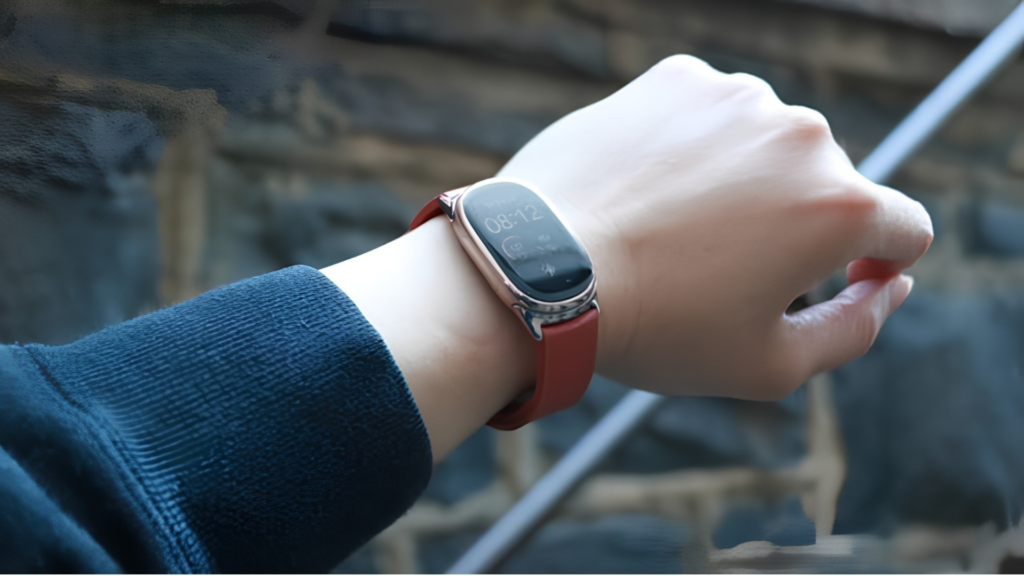

After years of waiting, Fitbit fans finally have a new tracker with a screen. The Fitbit Edge is the natural successor to the Charge 6, and it has been well received as a fitness band. But Tech Advisor’s managing editor, Chris Martin, argues that using it has only strengthened his case for a different product: a cheaper Pixel Watch A-series. It is a reasonable argument, and it says a lot about how Google’s wearable range is shaping up.
Filling a gap, and exposing another
Google surprised people with the Fitbit Edge a couple of weeks ago. Martin has been using it since, and although he is not ready to publish a full review, he admits to mixed feelings. He accepts that it fits neatly between two existing products. At the low end is the screenless Fitbit Air, and at the top is the flagship Pixel Watch 5. For many buyers, he says, the Edge will be the perfect fitness tracker.
That is a fair description. A band-style tracker with a display suits people who want activity, sleep and heart-rate data without the bulk, charging demands and price of a full smartwatch. Anyone who liked the Charge 6 and has waited for a successor will see the Edge as a welcome return.
The problem is that a three-step ladder still leaves a hole in the middle. Martin believes Google’s line-up has room for a fourth rung, and that the Edge makes this clearer rather than filling it.
Why an A-series makes sense
The A-series idea is not new for Google. The company has used the “a” label for years to mean a cheaper version of its flagship that keeps the essential experience, and Martin notes that the approach has already proved itself with Pixel phones and earbuds. He first suggested a Pixel Watch A-series years ago and still stands by that view.
The logic is hard to fault. A Pixel Watch is a premium device, and its price can put off buyers who only want a good smartwatch without every feature. A cheaper model aimed at that group could draw in new customers, particularly those who are already in the Pixel ecosystem but do not want to pay flagship prices. It would also give Google a stronger answer to budget Wear OS and Android watches from rivals.
The Edge looks like a Pixel Watch
One of the more interesting points in the piece is how closely the Edge follows Pixel Watch design. Martin describes it as looking like a Pixel Watch 5 squashed at the sides into a band. It also comes in colours that match the Pixel 11 Pro, and Google included it in Pixel 11 marketing materials long before its identity was known.
That is a significant shift in style. Band-style trackers have often looked awkward and utilitarian, and Martin says he welcomes the refreshed look. The software follows suit. The Edge largely mirrors the Pixel Watch interface: swipe down for quick settings, swipe sideways for tiles and swipe up for notifications. Anyone who has used one device will feel at home on the other.
This suggests Google is deliberately blurring the line between its Fitbit and Pixel Watch families. If the design language and interface are already shared, a cheaper round Pixel Watch is a small step.
What you give up
The Edge’s shortcomings reveal where an A-series model could sit. Compared with the Pixel Watch, it lacks Gemini Intelligence, Satellite SOS, Loss of Pulse Detection and NFC, among other features. Martin does not suggest that a Pixel Watch A should include all of these. His point is that there is a sweet spot between the Edge and the Pixel Watch 5, where a device could offer at least some of them.
Consider the missing features individually. NFC enables contactless payments, which many people use daily. Satellite SOS and Loss of Pulse Detection are safety features that matter most in emergencies. Gemini Intelligence is the newest and most speculative. A mid-tier watch could keep the most practical features and drop the most expensive ones, which is how A-series products usually work.
Why not just buy an older Pixel Watch?
The obvious objection is that shoppers can already buy a previous-generation model at a lower price. Martin acknowledges this and even says the advice has never been more fitting than in 2026, a year in which hardware improvements have been small and prices have risen sharply.
But he explains why a Pixel Watch 4 is not a true substitute. It may be available at a good price, but it is already a year into its software support period, so buyers get less long-term value. More importantly, he wants a Pixel Watch A to offer much better battery life.
The battery question
Battery life is the strongest part of his argument. The Edge can last up to a week because it does not run Wear OS. A simpler watch than the Pixel Watch 5 could in theory deliver much longer endurance too, a feature many smartwatch owners would value above most others.
Martin recognises that Google might hesitate. A cheaper watch with superb battery life could overshadow the flagship, which would complicate the product line. But he argues that Google should be improving battery life on the premium model anyway, noting that OnePlus has shown it is possible on a flagship Wear OS wearable.
This is a sharp point. Battery life is the long-standing weakness of Wear OS devices, and customers regularly cite it as a reason to choose a competitor. A product that fixed this problem at a lower price could change perceptions of the whole platform.
A simple wish
Martin’s own summary of the idea is almost playful. Take the Fitbit Edge, make it round, add more features and call it a Pixel Watch A. He admits it is unlikely to happen, but he makes it sound easy.
There is some truth to that. Google already has the design, the software and the cost-conscious hardware. What it lacks is the commercial decision to bring them together.
The bottom line
The Fitbit Edge looks like a strong product for people who want a stylish, long-lasting fitness band. But as an argument for what Google should build next, it may be more valuable than as a product in its own right. By showing how close the Fitbit and Pixel Watch experiences have become, it makes the case for a bridge between them. Whether Google listens is another matter, but anyone who wants a capable, affordable smartwatch with great battery life should hope it does.